
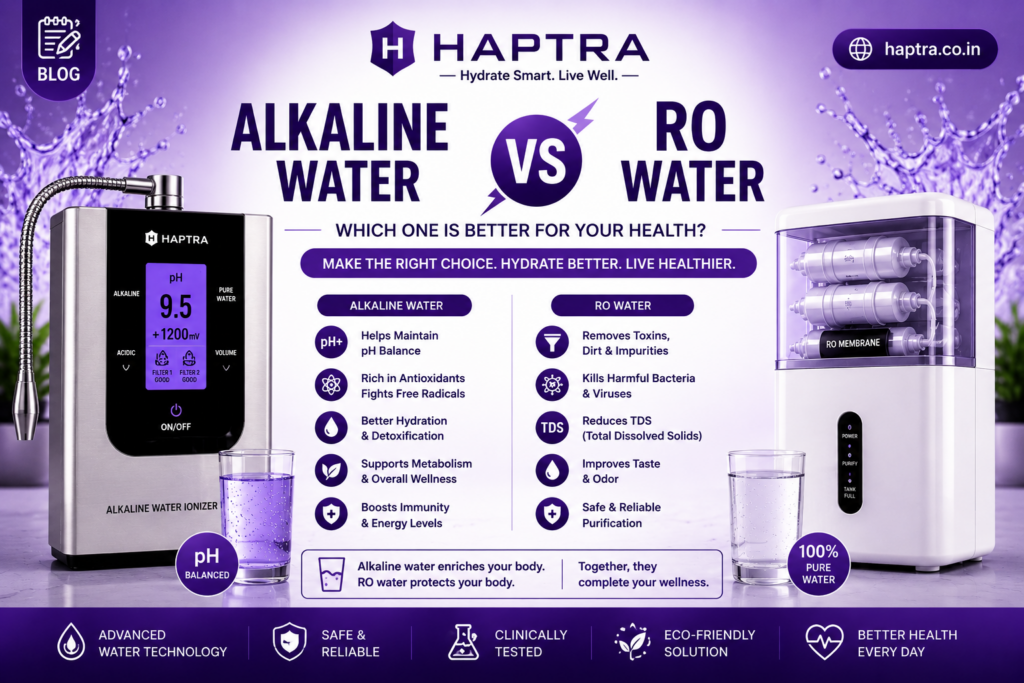
Every household in India today has one common question: which water is actually good for your health? The debate around alkaline water vs RO water has been growing rapidly as more people become aware of what they are drinking daily. Both types of water are widely used, but they work very differently and offer very different benefits. If you have been confused about alkaline water vs RO water, this blog will give you a clear, honest, and simple comparison so you can make the right decision for your family’s health and wellness.
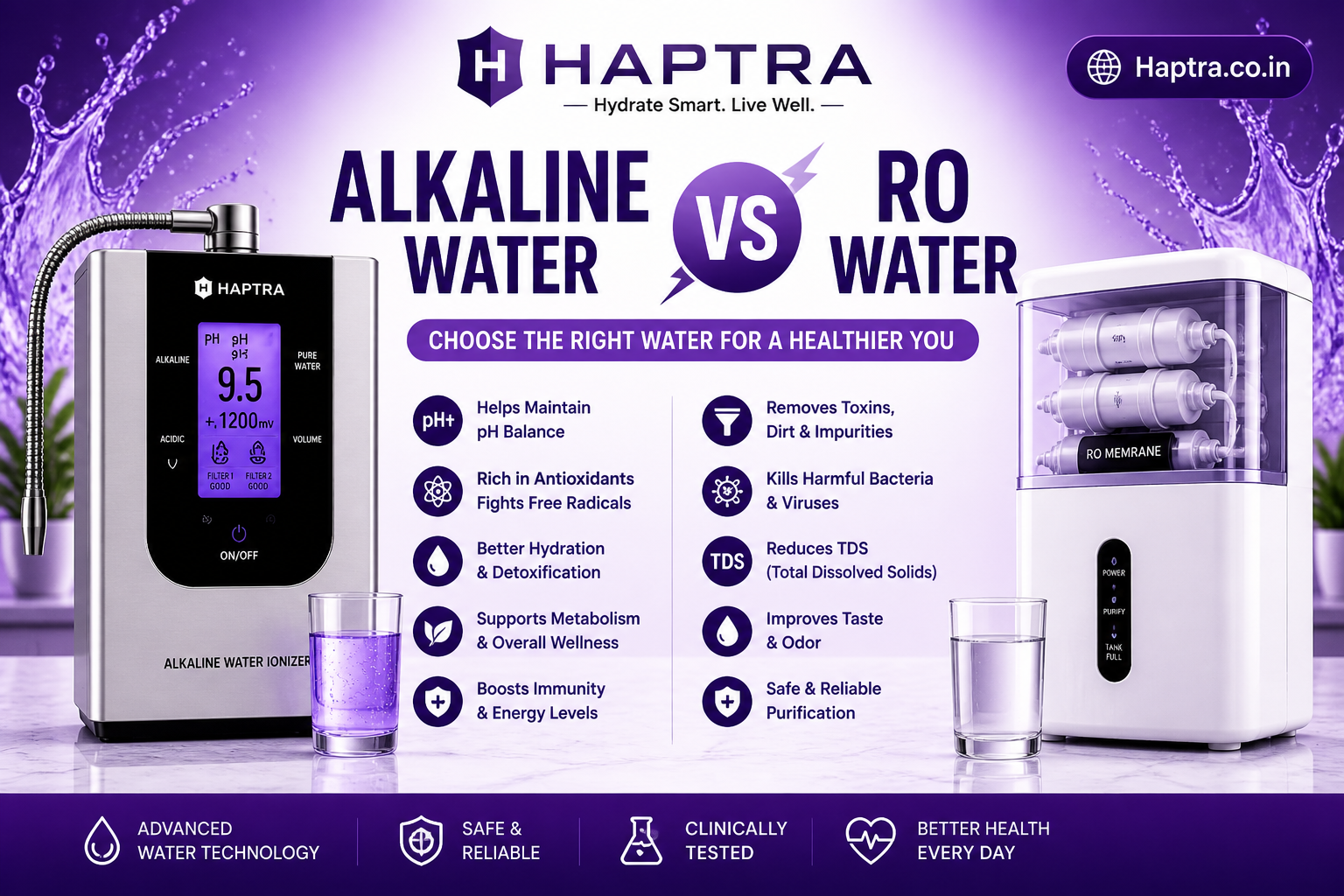
What Is RO Water?
RO water, or Reverse Osmosis water, is produced by pushing water through a semi-permeable membrane under pressure. This process removes contaminants, heavy metals, bacteria, fluoride, chlorine, dissolved solids, and impurities from water, filtering down to 0.0001 microns. RO water is considered one of the purest forms of drinking water available today.
However, the same process that removes harmful contaminants also strips out essential minerals like calcium, magnesium, and potassium from the water. This leaves RO water demineralized, with a slightly acidic pH typically between 5.5 and 6.5. Long-term consumption of demineralized water is not recommended by health experts, as it may cause the body to draw minerals from its own reserves to compensate.
When comparing alkaline water vs RO water, RO water wins on purity and contaminant removal, but falls short on mineral content and pH balance.
What Is Alkaline Water?
Alkaline water is water with a higher pH level, typically between 8 and 9.5, enriched with essential minerals like calcium, magnesium, potassium, and sodium. It is produced through an ionization process that raises the pH and adds healthy electrolytes to the water. Unlike RO water, alkaline water retains and enhances the mineral content of water, making it more beneficial for everyday hydration.
Alkaline water also carries a negative ORP (Oxidation Reduction Potential), meaning it has antioxidant properties that may help neutralize harmful free radicals in the body. Haptra‘s OxyJal alkaline water ionizer produces water with a pH of 8.5 to 9.5, ideal for daily drinking, healthy cooking, and overall wellness.
In the alkaline water vs RO water comparison, alkaline water stands out for its mineral richness, higher pH, antioxidant potential, and superior hydration capacity.
Key Differences Between Alkaline Water vs RO Water
pH Level: This is one of the most significant differences in the alkaline water vs RO water debate. Alkaline water has a higher pH of 8 to 9.5, which supports the body’s natural pH balance. RO water, after the purification process, has an acidic pH of 5.5 to 6.5 due to the removal of all buffering minerals.
Mineral Content: In the alkaline water vs RO water comparison, alkaline water contains essential electrolytes including calcium, magnesium, and potassium. RO water strips all dissolved solids, including these beneficial minerals, leaving the water flat and demineralized.
Antioxidant Properties: Alkaline water carries a negative ORP, giving it antioxidant potential that may help combat oxidative stress. RO water has no antioxidant properties. This is a key advantage of alkaline water in the alkaline water vs RO water discussion.
Water Wastage: RO systems can waste up to 75 to 80 percent of the water pushed through the system. For every 20 litres of RO water produced, nearly 80 litres may be wasted. Alkaline water ionizers produce significantly less wastewater, making them a more sustainable and environment-friendly choice in the alkaline water vs RO water comparison.
Taste: RO water often tastes flat due to the absence of minerals. Alkaline water has a noticeably smoother, cleaner, and more refreshing taste because of its mineral content, which is why most people prefer alkaline water for daily drinking once they try both side by side.
Cost and Maintenance: RO systems typically require more maintenance, including regular membrane replacements and electricity to power the hydraulic pressure. Alkaline water ionizers like Haptra‘s OxyJal are designed for long-term use with lower maintenance requirements, making them a cost-effective investment over time.
Health Benefits of Alkaline Water
Alkaline water supports the body’s natural pH balance and helps neutralize excess acidity caused by diet, stress, and lifestyle. It may provide relief from acid reflux and heartburn by deactivating pepsin, the enzyme responsible for acid damage. Regular consumption of alkaline water supports better digestion, improved gut health, and more effective hydration compared to regular or RO water.
Alkaline water may also support healthy aging by reducing oxidative stress and protecting cells from free radical damage. Athletes and active individuals benefit from alkaline water’s electrolyte content, which helps with faster rehydration and muscle recovery after exercise. Haptra users across India report improvements in digestion, energy levels, and skin health within just a few weeks of switching to alkaline water.
Health Benefits of RO Water
RO water is ideal for areas with high TDS levels, contaminated water sources, or where the presence of heavy metals, fluoride, or bacteria is a concern. It provides very clean, safe, and pure water for drinking and cooking. RO water is also recommended for preparing infant food and in laboratory settings where minimal impurities are required.
For families dealing with poor water quality or high TDS above 500 ppm, RO filtration is an important first step in ensuring safe drinking water. However, for complete health benefits, RO water is best paired with a remineralization stage to restore lost minerals and improve pH bringing it closer to the benefits of alkaline water in the alkaline water vs RO water comparison.
Frequently Asked Questions
1. What is the main difference between alkaline water vs RO water? In the alkaline water vs RO water comparison, the main difference is that RO water focuses on removing contaminants and produces acidic, demineralized water, while alkaline water focuses on raising pH and adding healthy minerals for improved hydration and wellness.
2. Is RO water acidic? Yes. In the alkaline water vs RO water debate, RO water is slightly acidic with a pH between 5.5 and 6.5 because the reverse osmosis process removes all minerals that naturally buffer the water’s pH level.
3. Which is better for daily drinking alkaline water vs RO water? For daily drinking, alkaline water vs RO water favors alkaline water because it retains essential minerals, has a higher pH, tastes better, and offers antioxidant benefits. RO water is better when the primary concern is contaminant removal.
4. Does RO water remove healthy minerals? Yes. This is one of the biggest concerns in the alkaline water vs RO water discussion. RO systems remove almost all dissolved solids, including beneficial minerals like calcium and magnesium, which are essential for bone health, muscle function, and hydration.
5. Can alkaline water purify water like RO? No. Alkaline water is not designed to remove heavy metals or harmful contaminants the way RO does. However, Haptra‘s advanced alkaline water ionizers work with pre-filtered or RO-purified water to give you the combined benefits of both purification and alkalinity.
6. How much water does a RO system waste? In the alkaline water vs RO water comparison for sustainability, RO systems can waste up to 75 to 80 percent of input water. For every 20 litres of purified water produced, roughly 80 litres may go to drain. Alkaline water ionizers are far more water-efficient and eco-friendly.
7. Is alkaline water good for acid reflux? Yes. Alkaline water with a pH of 8.8 or above has been shown to help deactivate pepsin, the enzyme responsible for acid reflux damage. This makes it a preferred choice in the alkaline water vs RO water debate for people suffering from acidity, heartburn, or GERD.
8. What pH level should drinking water have? Ideal drinking water should have a pH between 7 and 9.5. In the alkaline water vs RO water comparison, alkaline water naturally falls in this range at 8 to 9.5, while RO water sits below this at 5.5 to 6.5 unless remineralized. Haptra‘s ionizers produce water consistently within the ideal pH range.
9. Can I use RO water with an alkaline ionizer? Yes, and this is actually a great combination. You can pass RO-purified water through an alkaline ionizer to restore minerals and raise the pH. Haptra recommends this approach for households in areas with very high TDS or known water contamination issues, giving you the best of both worlds in the alkaline water vs RO water debate.
10. Where can I get an alkaline water ionizer in India? Haptra offers premium alkaline water ionizers and hydrogen water generators across India with delivery to all major cities including Udaipur, Jaipur, Mumbai, Delhi, and Bangalore. Their systems are specially designed to work with Indian water quality and are trusted by thousands of families for daily hydration and long-term wellness.
Which One Should You Choose?
The answer to alkaline water vs RO water depends on your water quality and your health priorities. If your local water has high TDS, heavy metals, or contamination issues, RO filtration is an important safety measure. However, for overall health, daily wellness, better hydration, and long-term benefits, alkaline water is the superior choice.
The smartest solution in the alkaline water vs RO water debate is a combined system — one that first purifies water through RO and then enriches it through alkaline ionization. This gives you the safety of RO purification along with the wellness benefits of alkaline water in a single solution.
Conclusion
The alkaline water vs RO water debate ultimately comes down to what your body truly needs. RO water keeps your water safe and pure, while alkaline water keeps your body healthy, balanced, and well hydrated. Understanding the difference between alkaline water vs RO water helps you make a smarter investment in your long-term health and your family’s wellbeing. If you are ready to upgrade your daily water quality with trusted, advanced water ionizer technology, visit Haptra India’s leading wellness water brand committed to helping every family live healthier, every single day.